Monday, June 25, 2012

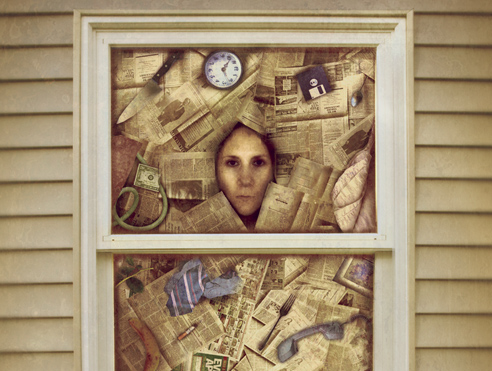
Sin, Shaun Allan


This is one of the more thought provoking novels I have ever come across.  I had to read it twice, before I could sit down and write this review!  Indie author Shaun Allan has created a real masterpiece with Sin.  Allan's style is narrative, and in a way, reminded me of James Joyce's equally compelling 'Finnegan's Wake'.  Others have compared Allan's style to Stephen King and Dean Koontz; and there is a slight similarity to their work as in it is definitely horror, but I am here to tell you Shaun Allen is an original in the purest sense. This is "One Flew Over the Cuckoo’s Nest meets Finnegan’s Wake."

Sin is a dark, urban fantasy, written with large dose of sardonic humor. We hear the tale from the man who was given the name 'Sin Mathews' at birth, but who goes by the name of Sin only, as the last name doesn't matter; only the name which is the sum of his parts matters.

Sin finds a coin, a two pence coin, or perhaps the coin finds him. Either way, this is the catalyst for Sin's curse. He finds himself flipping the coin compulsively -flip, catch - and it arcs through the air he sees images of disaster and death, which is then reported on the news. Eventually he realizes every time he flips the coin, someone dies; sometimes a lot of people die in what he believes are 'unnatural disasters' timed perfectly to the flip of the coin.  Though he tries to avoid flipping the coin, he finds himself doing it anyway.

No matter how he tries, he can't throw it away, or lose it. The coin always comes back to him when he buys something and gets his change; or even just appearing in his pocket.

Sin receives a letter from his sister Joy, telling him she had found a coin, and when she flipped it she made lives. She wrote that the responsibility for making the world happy was too much for her. She was alone in world of happiness she couldn't be a part of, and she killed herself.  Sin apparently had found his coin right after her death.  He decides to check himself into an insane asylum in order to get the sort of psychotropic drugs which will render him incapable of seeing the visions, and flipping the coin.

Sin's conversations with Dr. Connors in the opening chapter are adversarial, and illuminating. For the most part, he enjoys his stay in the asylum, but, being sane, he sees the sordid truth in the callous treatment and chronic over-medication of the patients.

Although posing as a mentally ill patient works for a while, the medications soon cease to be effective and he decides that since the coin always comes back to him as if by magic, maybe he has the power to teleport.  He resolves to commit suicide by teleporting himself into the heart of a furnace, hoping for instant incineration.  Unfortunately, he finds himself on a beach, instead of in Hell where he had hoped to be.

Sin has an encounter with Joy who tells him death is not what it is cracked up to be. She warns him "a storm is coming".  He continues his inadvertent journey, trying to get his bearings. After a chance meeting which reveals more of his powers, he finds himself in Grimsby, the home of his childhood.

The atmosphere throughout is surrealistic, but it is well-balanced Allen's lyrical, intimate style of prose, as in this series of images describing Sin's disorientation, “History doesn’t relate whether Jonah, Gepetto, and Pinocchio sat around a table eating pizza, sharing stories of prophecy and puppetry while in the belly of the whale, but I thought that I could relate to being swallowed whole.” 

Throughout the novel, Sin's ruminations are self-mocking, and world-weary, yet naive and innocent.  He bears the guilt of the world, and suffers the unbearable pain of being the cause of so many deaths, but still he finds ironic humor in every situation. Joy is grounded and guides him to the truth, but is not allowed to tell him anything.

 Nothing is what it seems in this tale, and right up to the end, you are not sure which reality is real.

The facts come out, or do they?  This book is a rollercoaster ride from the start to the finish, and I give it 5 stars for originality.

Wednesday, June 13, 2012

72 - hours to Crack the Universe’s Code; Mark O'Brien


72 - hours to Crack the Universe’s Code by indie author Mark O'Brien  is a novel of political intrigue, mathematics, passion and underlying it all, an imperative directive to humanity with dire galactic overtones.

Somewhat like the Illuminati, the Mathematika is a mysterious Greek society founded long before Christianity. The reason for its existence is to bring mankind ‘that which they know but cannot understand’ and was created to ‘safeguard the truths until mankind was ready to understand them’. Now the time has come, and the Mathematika is now ruled by the dark fanatic, Alexander Kepler – who believes ethical lines were drawn so you would know where to cross them. Yet, although he is extremely violent, murderous and obsessive, Kepler is a family man, and his relationship with his wife is one of the lighter parts of the tale. This most violent and evil of men is also a romantic, tender lover. However, the time has come for the world to know some basic truths about the Universe, and it is Kepler’s task to insure they are made public.

To this end, he kidnaps a renowned Muslim leader, Ibn Qurra. His henchmen also kidnap the renowned Rabbi Jacobi, and Father George Pappus, president of the Vatican Observatory Foundation -  all three at 10:45 am on the same day.

Not all of Kepler’s heavies are 100% behind him, one is a traitor, and another considers him to be insane. All the heavies are individuals, which makes reading them enjoyable.

Ransoms are sent: a series of 3 mathematical equations which all must be solved one per day within 72 hours. If one equation is wrong, all three of the kidnapped men will die.

The protégé of George Pappus, Clancy Sylvester, astrophysicist and mathematician, is determined to get his mentor back. The author has researched all three of the religions represented by the three kidnapped leaders, and also the cultures they represent.  The author also appears to have a firm grasp of mathematics, as I do NOT; but  on the positive side he did not make me have to do the thinking so the math was fine. Clancy’s friend Jules Hadamard (female, despite the name) who is a math genius explains it all. All of the characters are distinctly individual, and if some are over the top, well that is part of the fun.
While O'Brien goes a little heavy on the descriptions at times, over all this is a compelling read. There are moments of humor and also of pathos, and the action is non-stop. All in all, I found this to quite entertaining, and well written. This is a good read, and I do not hesitate to recommend it!

Saturday, June 2, 2012

Cornerstone, by Misty Provencher


Nalena's story captured me from the first sentence. The image of a girl living with a mother who writes constantly, filling the house with piles and piles of paper covered with small, neat writing, was addictive. And Nalena herself is beautifully realized. Like Harry Potter in The Order of the Phoenix, she is adolescent and angry.


Her anger is understandable. She is bullied at school, and she has to lug home those reams of paper for her mom. She's pretty, and she could be popular, but because one girl saw the inside of her home, her nickname is "The Waste."


It isn't until she meets Garrett Reece that her life begins to change. He is gorgeous and kind, and his family takes Nalena and her mother in. More importantly, he seems to understand her mom and why Nalena herself is starting to experience some strange episodes of her own.


Provencher insisted on including the fantasy element in the book, to the point of rejecting agents' cries for a rewrite into a more realistic book. The fantasy is well-done, although the ending does feel a bit rushed. (As a fellow author I can sympathize; endings are incredibly difficult to pull off.) Still, it's satisfying and makes me want more.


Keystone will be the next in the series, and I shall certainly look for it.


Here's what I liked about the book:


1. The writing is fantastic. "A wave of hot, rancid stomach soup rolls through me." I remember that stomach soup feeling from my own teens. That little sentence captures that feeling of dread perfectly. 


Another example: "There's a whole library full of empty tables up front, but this boy, with hair that would probably feel like soft twine between my fingertips, has to sit here." Great description, and I'm very thankful that she resisted the urge to use the Jewel Words: topaz eyes, etc. 


2. Nalena herself. She's a well-drawn, conflicted character.


3. The tensions between Nalena and her mother. It's perfect and logical.


4. Provencher is self-published, and the format and edit are just about perfect. Too many self-published novels roll into cyberspace with myriad errors, and Cornerstone is clean of those. Again, as an author with a small (tiny) press, I appreciate this. Self-publication is an art form, and Provencher has pulled it off beautifully!


A few quibbles:


1. You know that I love female friendships. Nalena and Garrett become friends, but she doesn't have a girlfriend to chat with in the book. The one girl who hangs with her in school, Cora, is depicted as a physically repulsive, not-very-nice person. I would have preferred to see a friend who could be counted on throughout the story.


2. Garrett was just a bit too perfect. He's gorgeous and kind, as I said, but he really would have sprung to life if he had a few flaws. 


Perhaps these will be addressed in the next book. And I'm being very picky. For those quibbles, I give Provencher a 4 out of 5 stars, and I definitely recommend this as a great read.


You can buy Cornerstone here: on Amazon and on Barnes and Noble Nook
and find Misty Provencher here: http://mistypro.blogspot.com/
She is also on Twitter: @mistyprovencher

Saturday, May 19, 2012

Sax in the Suburb, Marilyn Rucker

Todays review is for Sax in the Suburb, by Marilyn Rucker, and is brought to us courtesy of Alison DeLuca, whose blog, 'Fresh Pot of Tea' is one of my favorites.
There is something about books that makes me hungry. The act of reading just seems to go naturally with a pot of tea, of course, as well as a plate of scones and some finger sandwiches. There are books out there that strengthen this connection. One obvious culprit is Dickens. His characters are always going off on picnics complete with pork pies, cold cider, and rounds of cheese. One of my favorite descriptions of his is his "curiously light wine, with a curiously heavy cake." Another book that makes me hungry is Miranda Warning. I'm almost at the end (reading it slowly so it will last; I'm going to hate being finished) and I love the gorgeous descriptions of food. The book, a murder mystery, is set in Texas, so there is plenty of RC cola, banana whoopie pies, as well as buttery croissants and delicious coffee drinks.
Miranda, the main character, is just as delicious. She is a bit overweight (who wouldn't be, with all that food) and works in a run down law office where her boss often falls asleep on the floor. She has to learn to maneuver her rolling chair carefully so she won't squash his hand. She is also a sax player in a local band, and one of her band mates gets bumped off in the beginning. The way that Miranda investigates the murder is funny and well written and completely believable. Oh, and there's a romance, too, and it is delicious as well. To be honest, I'm not a huge murder mystery fan, but I'm enjoying this book with a great deal of delight. It should be savored, like a whoopie pie, for its flavor and creamy filling.
Thank you for this delicious review. Alison Deluca is the author of 'The Crown Phoenix Series', a wonderful classic series of YA adventures.

Saturday, May 5, 2012

The Woman Upstairs, Mary W. Walters


First published in 1989, The Woman Upstairs written by Mary W.Walters is a timeless tale of a family's descent into dysfunction and estrangement. A young woman, Diana Guthrie, has been told that her estranged mother is dying. Neither her mother nor her brother has told her this, but a friend of the family has taken it upon himself to tell her, believing that it is the right thing to do. Diana makes the arduous drive from Edmonton, Alberta to well-heeled Donellon, Ontario, with no clear idea of why she is going to where she is not wanted, and not knowing what she will do when she gets there.


Diana's mother's family, the Leavenworths, had long been the pre-eminent family in Donellon society, and her mother and grandmother never let her forget that. Her haughty, disdainful grandmother despised Diana's father, whose parents were from the United States, sneering at him and his textile factory in Donellon as being low-class and generally treating him despicably.


Grandmother despised the Guthrie Textile Factory for its ugliness, its base origins and considered it to be a blight on the landscape. She was frank in her opinion that her daughter married far beneath herself.


Despite Grandmother's disdain of her husband, Diana's own mother insisted that Grandmother live with them, against her husband's earnest wishes. Grandmother is not simply hateful to Diana's father. She also open in her intense dislike of Diana, the child of six years of age who did not fit into the Leavenworth mold. From the moment her grandmother moves in with them, the Guthrie marriage begins to deteriorate, and Diana's childhood becomes an endless cycle of guilt and recrimination.


All through her school years, Diana is both admired and despised for her connection to the Guthrie Textiles, as her father is the largest employer in Donellon. Her own grandmother's vocal disdain was perhaps a part of that, giving the local aristocracy permission to feel somehow more upper-class than someone whose wealth is both new and foreign. She has few close friends and is awkward and unsure of herself as she traverses the high school years.


There are many open wounds in Diana's relationship with her mother, and the news that her mother is dying sends Diana into an emotional tailspin, which she desperately tries to keep contained under the smooth veneer that, if she only knew it, is the mark of the women in her family.


Her younger brother, Mitchell, still lives with their mother, and is possessed of an extremely warped view of the situation. He is angry and resentful of Diana, telling her frankly that she is not welcome there. He arrogantly orders her to stay away from their mother. Indeed, Diana does hesitate to go upstairs to her mother’s room, but that is for reasons of her own.


The story of what lies between Diana and her mother unfolds over the space of several days, during which she lurks downstairs, unwilling to go upstairs to her dying mother, and unable to leave. Other relationships which had been poisoned as a by-product of the Guthrie family situation come to light and are examined for the first time in years.


As a young child, her relationship with her mother was destroyed by her grandmother, whose hateful actions go unpunished, while Diana's punishments for natural childish behaviors are never-ending.


Guilt, abandonment and death form the watershed moments in Diana's childhood. Her father breaks under the extreme pressure of living with his mother-in-law, and abandons his family, which cuts the young Diana deeply.


The suicide of Noel, the boy she loved, drives her to leave Donellon under a cloud of hate and suspicion. Many people blame Diana for his death. The story of what really happened, and what lies between three generations of women in one family is compelling and impossible to put down.


The characters are clearly drawn and environment in which they live is rich and vivid.  I highly recommend this classic book, as either an e-book or as a paperback.


Other books by Mary W. Walters include several technical books and novels, including  The Whole Clove Diet, a novel that was just published in March of 2012, and is soon to be available as a Kindle download.

I guarantee that I will be buying that book!


Tuesday, May 1, 2012

Requiem For The Widowmaker, Blackie Noir


~~*~~
Guest Review by John A. Aragon:


Coarse, gritty, and brutal prose…


I "met" Blackie Noir on an online writers' forum about four years ago. Over the years he occasionally gave us tantalizing glimpses of his coarse, gritty, and brutal prose. Now he has finally published some of his brilliant and savage novels.

REQUIEM FOR THE WIDOWMAKER is an astounding work. It offers a dark vision filled with fascinating, well developed characters from the underbelly of the Southern California biker culture, and from the universal and timeless perspective of homicide detectives.

This novel is action packed, tightly plotted, psychologically incisive, and, ultimately, life affirming, despite its unflinching view of the pain of human existence. It's a page turner--I couldn't put it down. This is a novel such as Charles Bukowski might have given us.

Detective Nadine Kozak and her partner, the aging, old school, Johnny Vance team up to hunt down a vigilante serial killer called the Widowmaker. Their quest will lead them to places in which they must face their own demons and question their most deeply held values.

Blackie Noir's writing is so much fun that some might say: "Yeah, but is it great literature?" My answer is; I don't know. But consider this passage and decide for yourself:

"Watching the water stretching out, it's darker indigo melding with the paler azure of the sky where they joined on the horizon. This early in the morning, both managed to maintain the illusion of pristine cleanliness. As the day wore on the truth would out, their faux virginity shattered, both sky and sea would reveal their true colors, the horizon becoming a pronounced line, as dreary beige met dismal gray. Vance sighed; metaphor for the career of an aging cop."

Noir, Blackie (2012-04-13). Requiem For The Widowmaker (Kindle Locations 5013-5016). . Kindle Edition.
~~*~~
Special thanks for this week's review to
John A. Aragon, author, trial lawyer and  all-round renaissance man.

Saturday, April 14, 2012

Wishbone, Brooklyn Hudson


This week we are exploring the dark side of life in the bucolic country-side with the unnerving novel, Wishbone, by indie author Brooklyn Hudson.

The tale begins with Rachel and Julien Grenier, a well-to-do couple who live on the Upper Eastside of Manhattan. Julien was born on a farm in France, and at the age of 9 he witnessed his father brutally murder his beloved grandfather.  He does not share this traumatic experience with anyone, not even his wife, although he is plagued by dreams of the event.  A sculptor and artist, Rachel knows that he has has secrets, but is content to leave them be as they don't intrude on their life together.

Unfortunately, Rachel is the victim of a brutal attack that culminates in the miscarriage of their baby; a child that Julien was unaware of and would not have wanted. 

Rachel sinks into depression bordering on madness, and is ruled by her fears.  Julien is desperate to bring her back to normal. To escape the past and give Rachel a new start in life, Julien quits his job and finds a home in the country, a lovely old Victorian that Rachel falls in love with.

King's Hollow appears at first to be the miracle they prayed for.  The one thing that Julien is not really on board with is the Chickens that come along with the place, but eventually he accepts them.  The chickens are cared for by a developmentally disabled seventeen-year old, named Sarah. 

Sarah even does the butchering of the chickens, and although she is unhappy at eating a 'pet', Rachel cooks it up and finds it to be the best chicken she ever ate, as does Julien. At the end of their meal, they take the wishbone, and play the game of wishing on it.

This begins a series of events, and their life together takes a strange turn, directly into the Twilight Zone.

I could not put this book down.  Julien is handsome and strong, and loving and giving despite his secrets.  Once they begin the game they cannot quit, nor can they stick to the rules they set for themselves. Rachael is no longer herself and Julien is experiencing a string of bad luck and unfortunate accidents.

And at the center of everything is Sarah and her beloved chickens.

This book will have you thinking long after you put it down.  I don't think that I will ever see a Thanksgiving dinner again and not think about this book!